The ACL tear is more than an injury in the knee; it is a turning point.
As an athlete, a fitness nut, or an active person, a torn ACL will define
not only the way you are now a confident mover in the short term but also
secure the health of the joints and your further living in the long run. We
have witnessed hundreds of cases of ACL injuries in a year in Dr. Gaurav
Khera's (Orthopaedic Clinic) Delhi NCR, and among patients, we find that
questions as to whether surgery is necessary or not are one of the most
frequently asked ones.
So, why is ACL reconstruction surgery so
frequently the effective, or in some cases, necessary option?
What Is the ACL and Why Does It Matter So Much?
One of the large ligaments of your knee joint is called the ACL. It joins the
thigh bone (femur) to the shin bone (tibia) and prevents the slippage of the
tibia. It also helps in controlling rotational stability- especially during
pivots, jumps and making sudden directional changes.
A ruptured ACL
causes:
- Unsteadiness of the knee, or having a sense that it could slip at any moment
- Inability to run, walk upstairs or turn around
- Weakness and swelling
- Chronic injury to the meniscus and cartilage without treatment
In the absence of surgical repair, these problems are likely to progress with time, especially among individuals who move a lot.
Why ACL Tears Don’t Heal on Their Own
In contrast to muscle or minor ligaments, the ACL’s inherent healing capacity is weak because:
- Positioned inside the knee capsule, it is bathed in synovial fluid, whose lubricating action prevents clot formation.
- The torn ligament ends slip apart and never reattach.
- Continuous motion of the knee disrupts the anchoring of scar tissues.
Even most complete ACL tears are not ideally handled by conservative (non-surgical) management and patients with ACL tears where returning to the sports field or continuing an active lifestyle is of interest.
Who Needs ACL surgery?
Mild sprain or partial tear can be handled by bracing and physiotherapy but the following categories all tend to necessitate ACL reconstruction surgery:
1. Young and Active Individuals
No matter what sport you like, football, basketball, or kabaddi, pivot and
cutting motions challenge the ACL. Management of recurring injuries is
common in non-surgical management.
2. Athletes
When you like running, sports, hiking and workouts at the gym, surgery
remains the best option to restore normalcy and avoid instability.
3. Patients with Associated Injuries
Most ACL tears are accompanied by meniscus injuries or cartilage erosion.
Repair is possible through surgery and long-term complications are
eliminated.
4. Instability in Daily Life
Surgery is the safest means of restoring integral joint when the knee
collapses when you are walking or engaging in some less severe activity.
What Happens If You Delay or Skip ACL Surgery?
We often see patients at the Dr. Khera clinic who had chosen conservative treatment and returned months later with:
- Repeated instability leading to meniscus tears
- Early osteoarthritis caused by joint malalignment
- Thigh muscle wasting due to idleness
- Reduced confidence in decreased mobility particularly on stairs and uneven surfaces
Delayed surgery can be more problematic in healing, taking longer in rehabilitation and restricting your prognosis.
How ACL Surgery Helps
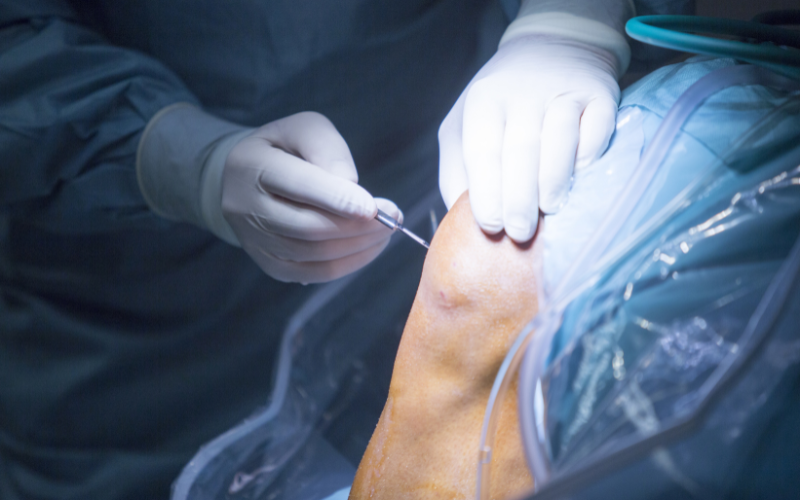
ACL reconstruction surgery replaces a ruptured ligament with a graft, which can be generated from the patient's own body (autograft) or obtained from a donor (allograft). Minimally invasive arthroscopic procedures are performed at the clinic of Dr. Khera, and this implies:
- Smaller cuts and lesser scarring
- More rapid recovery and reducing the risk of infection
- Accurate placing of graft long-lasting joint stability
Why Choose Dr. Gaurav Khera for ACL Surgery?
Dr. Gaurav Khera is a renowned professional with over 20 years of experience in joint reconstruction surgery and the care of sports injuries in the Delhi NCR region. His method is a mix:
- Intensive preoperative assessment and education
- The expertise of arthroscopic surgery
- Individual rehabilitation planning assistance using physiotherapy
- Concentrate on complete restoration to performance- be it competitive athletics or an active life
Post-surgical monitoring, regular check-ups, and instructions in increasing the strength of knees and preventing injuries are also available in our clinic.
Life after the Surgery
The healing process is slow and satisfying:
- 0 weeks 2 weeks: Pain management, oedema treatment, limited movement
- 2-6 weeks: Controlled weight-bearing, weaning of the brace, simple mobility
- 6 12 weeks: Strength, balance training
- 3-6 months: Developed conditioning
- 6-9 months: Clearance to resume full activity/sports
You will never be lost in the process with our team; we guide you through surgery to returning to play.
Final Thought
Ignoring an ACL tear can appear to be an easy way out. However, long term research indicates that surgical reconstruction has the highest hope of giving full recovery and avoiding degenerative damage.
We will not force you to operate and at the Dr. Khera Clinic we are here to assist you with facts, with expert care and to help you restore not only your knee, but also your confidence.
Do you think you tore your ACL? Don’t guess. Make an appointment with Dr. Gaurav Khera and receive a clear diagnosis and a unique treatment plan. Injury does not need to be the end of your active life; it can be the beginning of a new one.